The Journal · 5 July 2026
Why the arrow points up.
Three centuries of the broad arrow, and why we put a government property mark on a watch business.
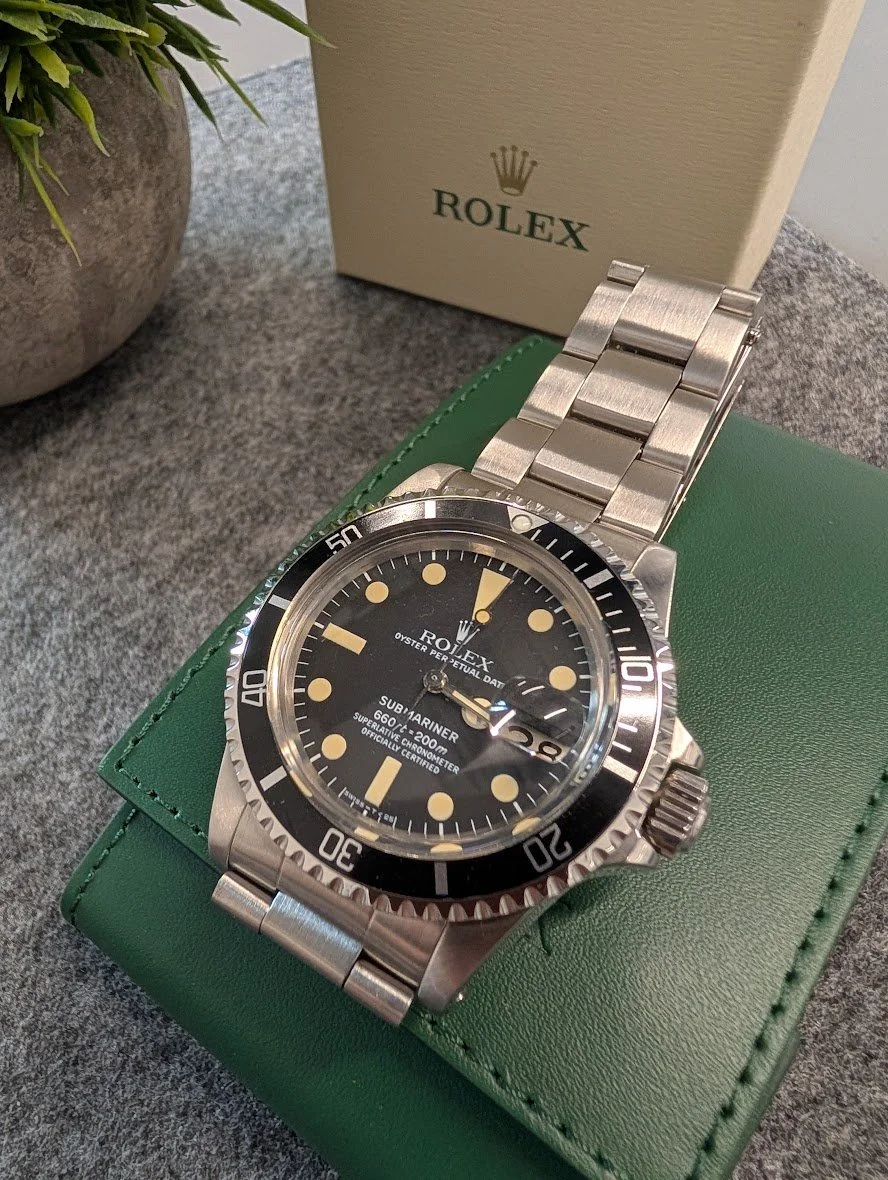
For three hundred years, the broad arrow was struck into everything the British Crown stood behind. Rifle stocks. Ration tins. Blankets, boots, telescopes — and, by the twentieth century, the dials and casebacks of military-issue watches. It was never decoration. It meant something specific: this object has been inspected, it meets the standard, and someone is accountable for it.
Collectors know the mark best from the dials of Dirty Dozen field watches and military Submariners, where a small arrow between the words tells you the watch was issued, not bought. Those watches were tools. They were expected to work, and somebody signed for them.
The standard, applied to dealing
Most of the vintage trade runs on the phrase “sold as seen”. We think good watches — vintage, neo-vintage or modern — deserve the opposite: sold as inspected. Every watch that passes through Broad Arrow crosses the bench before it crosses the counter, and leaves with a written condition report. Polished cases get called polished. Service parts get called service parts. The report stays published after the watch sells, because the archive is the track record.
That’s the whole idea, and the whole brand. The arrow points up because that’s how the Crown stamped it — and because up is the only acceptable direction for the standard to move.
Broad Arrow Watchworks — from the bench