The Journal · 13 July 2026
Ice on the wrist — watches of the polar hard men.
From the Endurance to unsupported Antarctic crossings — what actually survives on the wrist when the world turns white.
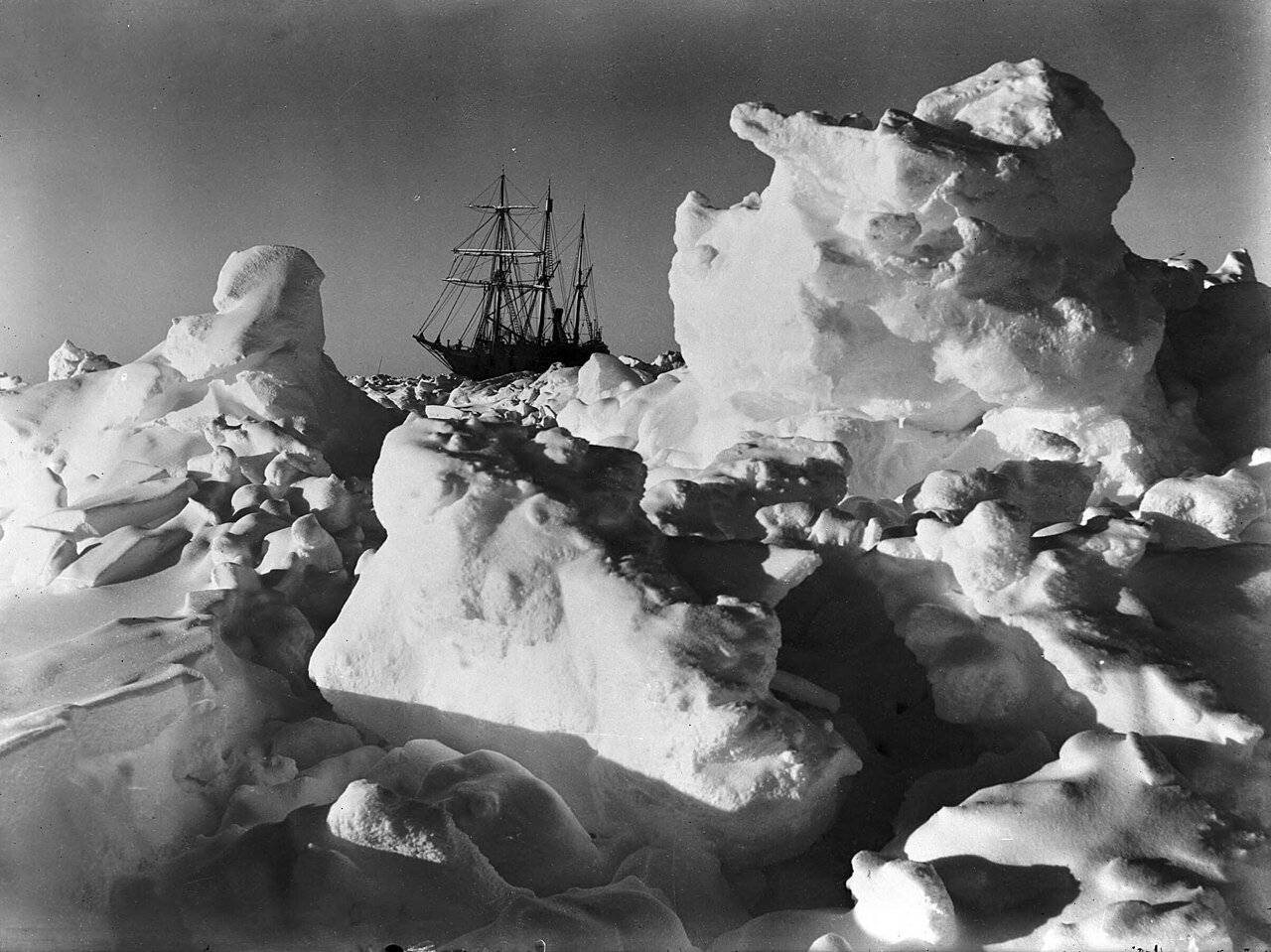
There is no environment on Earth that hates a watch quite like the polar regions. Oils thicken, gaskets shrink, batteries give up in open protest, and — a detail people forget — for months at a time the sun simply refuses to tell you whether it’s 2am or 2pm. Which is exactly why polar exploration has quietly driven some of the best watchmaking of the last century. Let’s take a wander through the ice.
The Shackleton era: navigation or death
In 1914 a ‘watch’ wasn’t about knowing when lunch was — longitude came from chronometers, and chronometers came from careful men guarding them with their lives. When the Endurance went down, the expedition’s timekeepers were among the things they saved. Frank Worsley then navigated an open boat 800 miles across the worst ocean on the planet to South Georgia by chronometer, sextant, and sheer bloody-mindedness — one of the greatest feats of navigation ever recorded, and at its heart it is a TIMEKEEPING story. Never let anyone tell you accuracy is boring.
The 24-hour question (or: why the Explorer II exists)
Fast-forward to 1971 and Rolex builds a strange orange-handed thing — the Explorer II 1655 — whose party trick is a 24-hour hand. Utterly pointless in Basingstoke; absolutely essential at 85° South in December, when your body clock is jelly and the sun just circles the sky like it’s lost. Polar day and polar night are THE use case for a true 24-hour display, and it’s why the big crown’s expedition catalogue leans so hard on the ice.

Fiennes, Messner, Venables — the modern hard men
Sir Ranulph Fiennes — Transglobe, both poles, the lot — spent decades as the living embodiment of the expedition Rolex, Explorer II adverts and all. Reinhold Messner, who after running out of mountains crossed Antarctica on foot for something to do, is another long-time Rolex man of the same school. And Stephen Venables — first Briton up Everest without oxygen, who later retraced Shackleton’s South Georgia crossing — belongs to the same testimonee tradition. The common thread isn’t the logo, mind you: it’s that these men needed instruments that work at temperatures where plastic snaps and batteries nap, and mechanical watches — properly serviced, properly lubricated — just KEEP GOING.
Which, since you ask, is the bench’s favourite moral: the cold doesn’t kill watches, neglect does. If your own expedition piece has spent thirty years ‘running fine’ on oils older than us — the MOT was invented for you. No sextant required.
Broad Arrow Watchworks — from the bench