The Journal · 24 July 2026
Habring² — the two-person watchmaker the big brands fear.
A married couple in a small Austrian town, a few hundred watches a year, and some of the cleverest engineering in modern horology. Here’s why the geeks whisper about Habring².
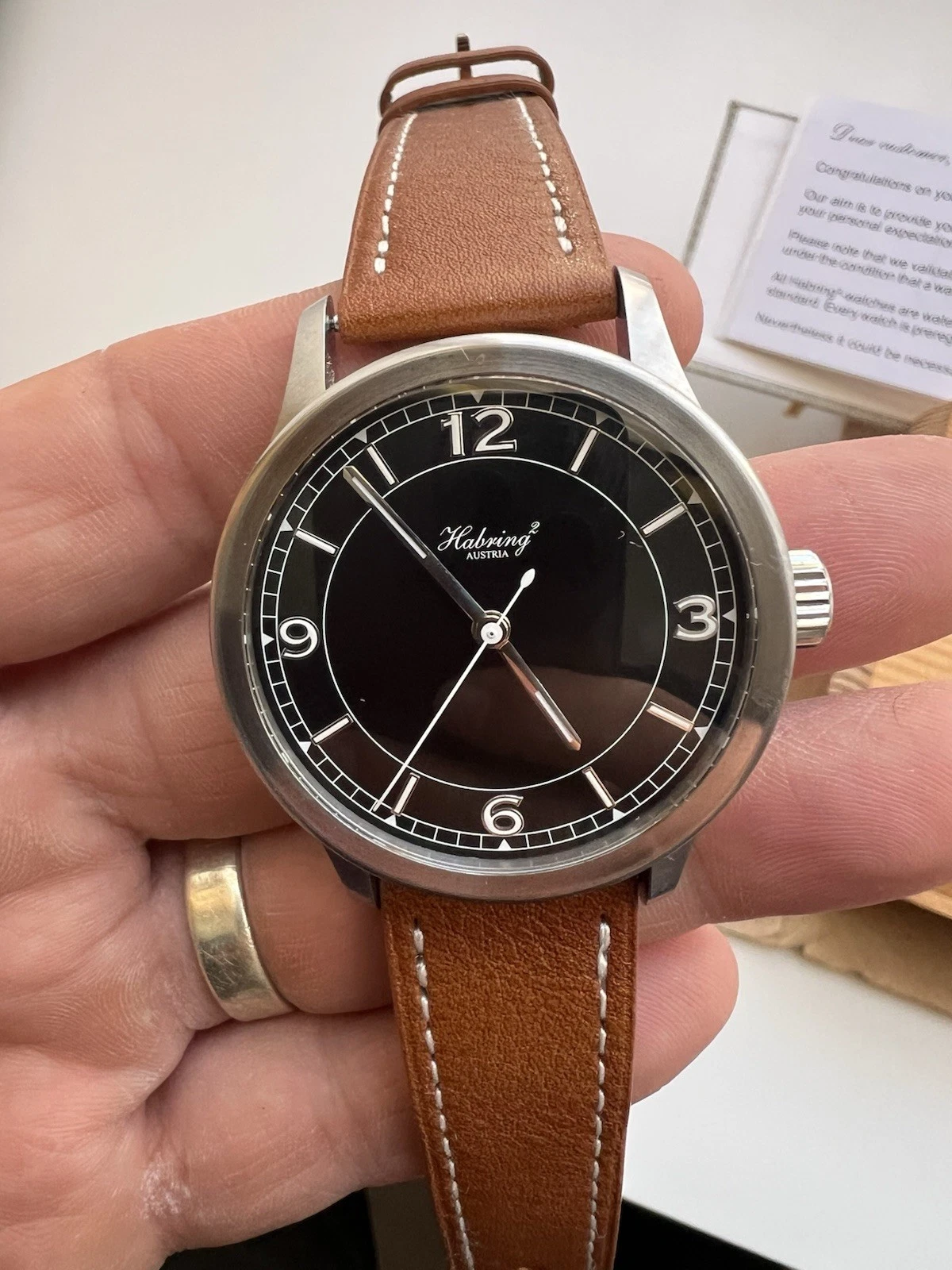
Pop quiz: name a watchmaker whose entire company would fit in a decent-sized living room, yet has taken home MULTIPLE trophies at the Grand Prix d’Horlogerie de Genève — the industry’s Oscars — while the marketing departments of the big Swiss maisons quietly seethe. If you said Habring², congratulations, you are officially one of us. If you said anything else — pull up a chair, because this is one of the great stories in modern watchmaking.
The man who democratised the split-seconds
Rewind to the early 1990s. A young Austrian engineer named Richard Habring is working at IWC, and he’s handed one of horology’s classic problems: the rattrapante — the split-seconds chronograph — a complication so fiddly and expensive that it lived exclusively in the price-on-application cabinet. Richard’s solution was so elegant, so mechanically CHEEKY, that IWC patented it and built two decades of Doppelchronographs on it. One engineer, one brilliant idea, and a complication for the few became a complication for the many. That’s the brain we’re dealing with here.
Habring, squared
In 2004, Richard and his wife Maria set up shop in Völkermarkt — a small town in Carinthia, Austria, that your sat-nav has never heard of — under the name Habring². The squared bit is the two of them. That’s the workforce, more or less. From that workshop comes a few hundred watches a year, engineered with the kind of no-nonsense, service-first thinking that most brands abandoned around the time they hired their first brand ambassador.
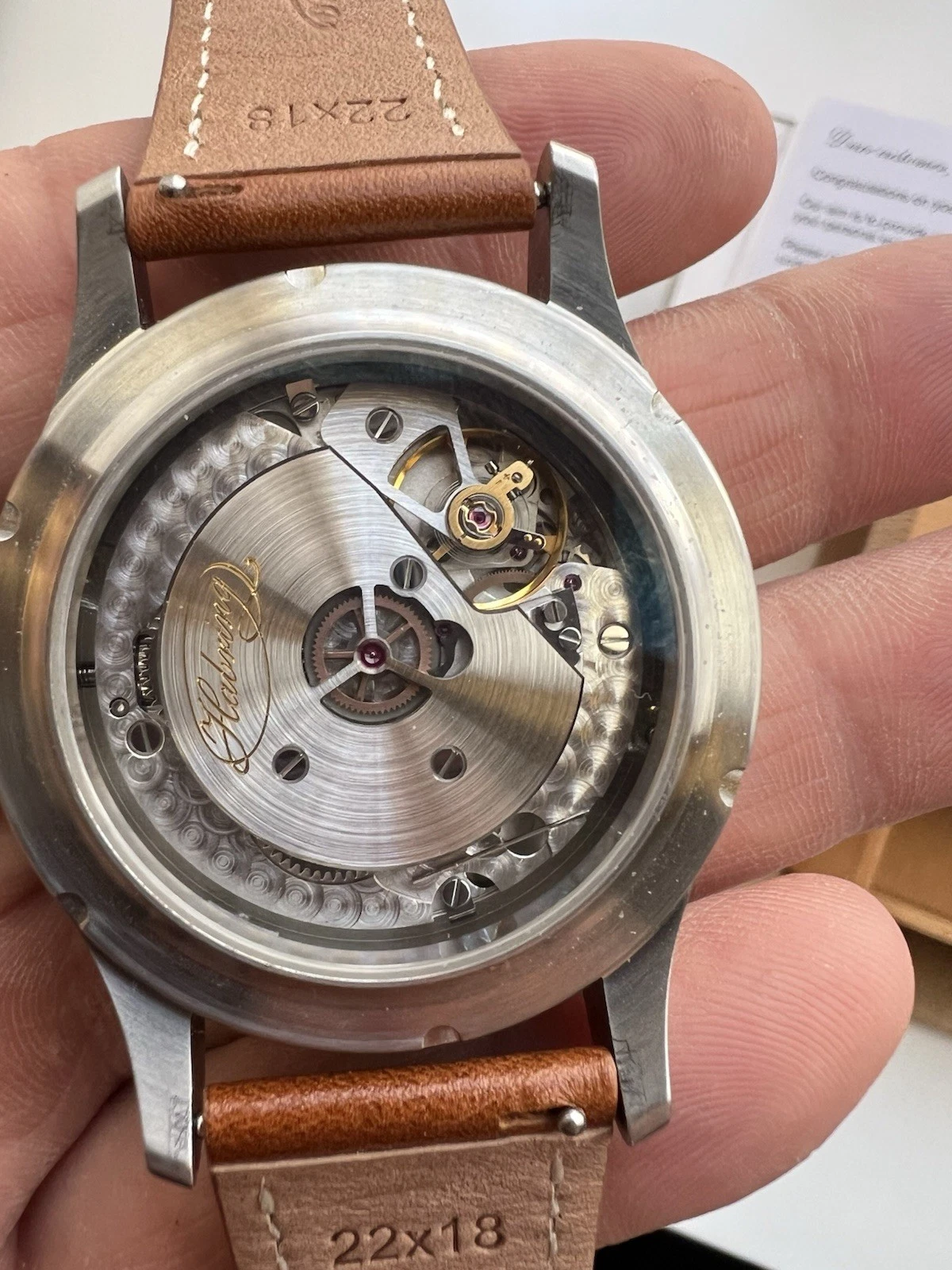
And the names on the dials? Family. The Felix — their first fully in-house calibre, launched in 2014 — is named the way you’d name something you love. The Erwin, with its famous jumping seconds, honours Richard’s father. The Doppel is, well, the split-seconds coming home to its inventor. When the IWC patent finally lapsed, Richard simply built his own — better, and for a fraction of the money. There is something QUIETLY satisfying about that.
Why the geeks whisper about them
Three reasons, and they’re all Broad Arrow reasons. One: engineering over marketing — a Habring² does something mechanically interesting at a price that makes the equivalent Swiss complication look faintly embarrassed. Two: they’re built to be SERVICED — parts availability and serviceability are design requirements in Völkermarkt, not afterthoughts, which is music to any watchmaker’s ears (ask ours). Three: rarity with substance — a few hundred a year means you will simply never see another one at the pub, and unlike most ‘exclusive’ watches, the exclusivity is a by-product of two people making things properly rather than a waiting-list strategy.
The bit where we declare an interest
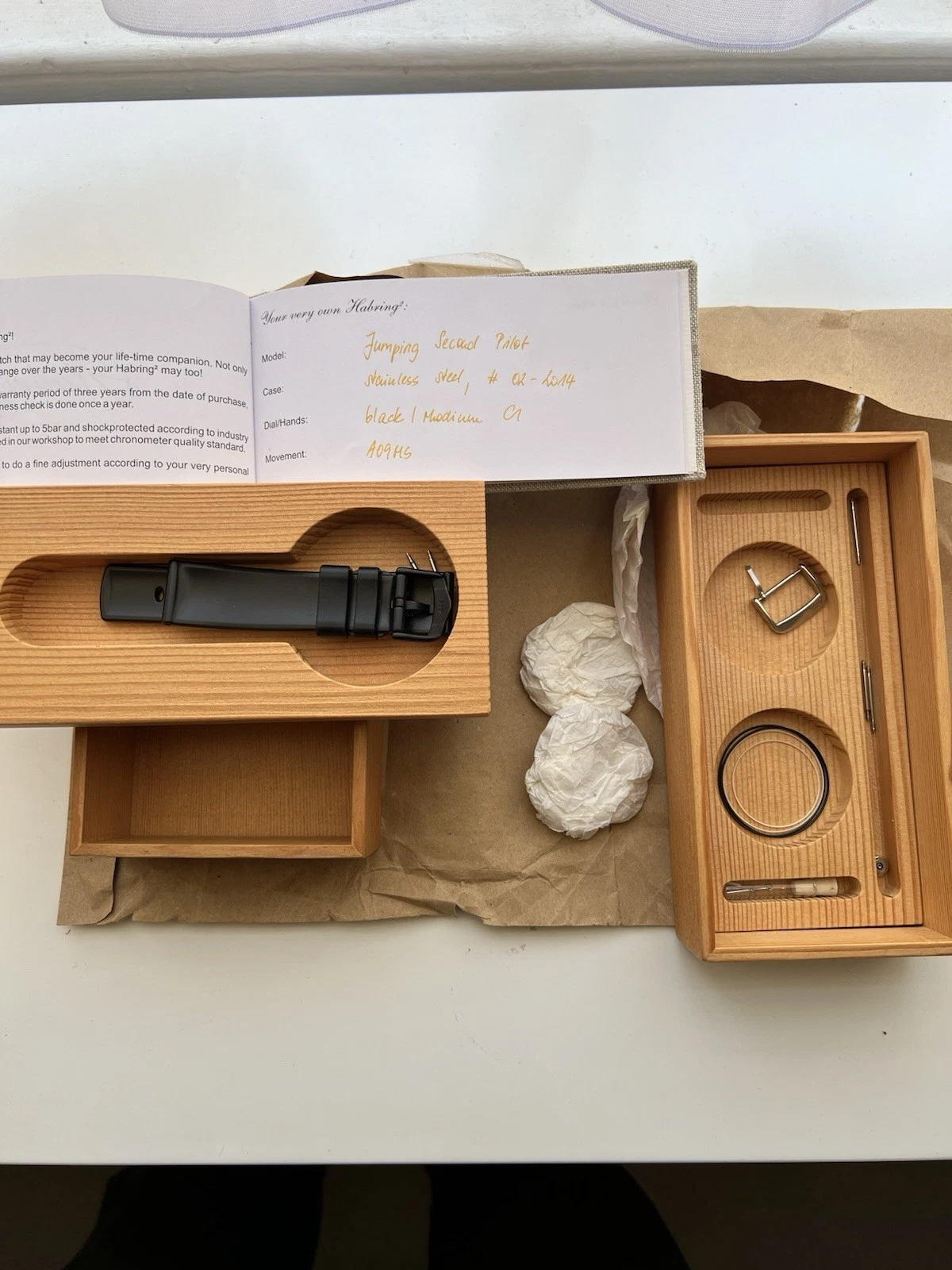
Full disclosure: we’re not writing this from a position of monk-like neutrality. Cabinet piece №1 at Broad Arrow — the very first watch bought for the new cabinet — is a 2014 Habring² Erwin Pilot: 42mm, black sector dial, full set, in very good honest condition. We chose it deliberately. A new dealer’s first watch says everything about what the cabinet will stand for, and we wanted it to say: engineering, honesty, and watches for people who actually READ pages like this one. It’s available now — and watches like this do not hang about.
Broad Arrow Watchworks — from the bench